Health

Heatstroke in Japan: What Travelers Should Do

Recognize heat illness, cool the person safely, know when to call 119 and check Japan’s seasonal heat-information service before outdoor travel.

Page updated:
Source-check dates are shown with the relevant information below. A page edit does not mean every detail was rechecked.

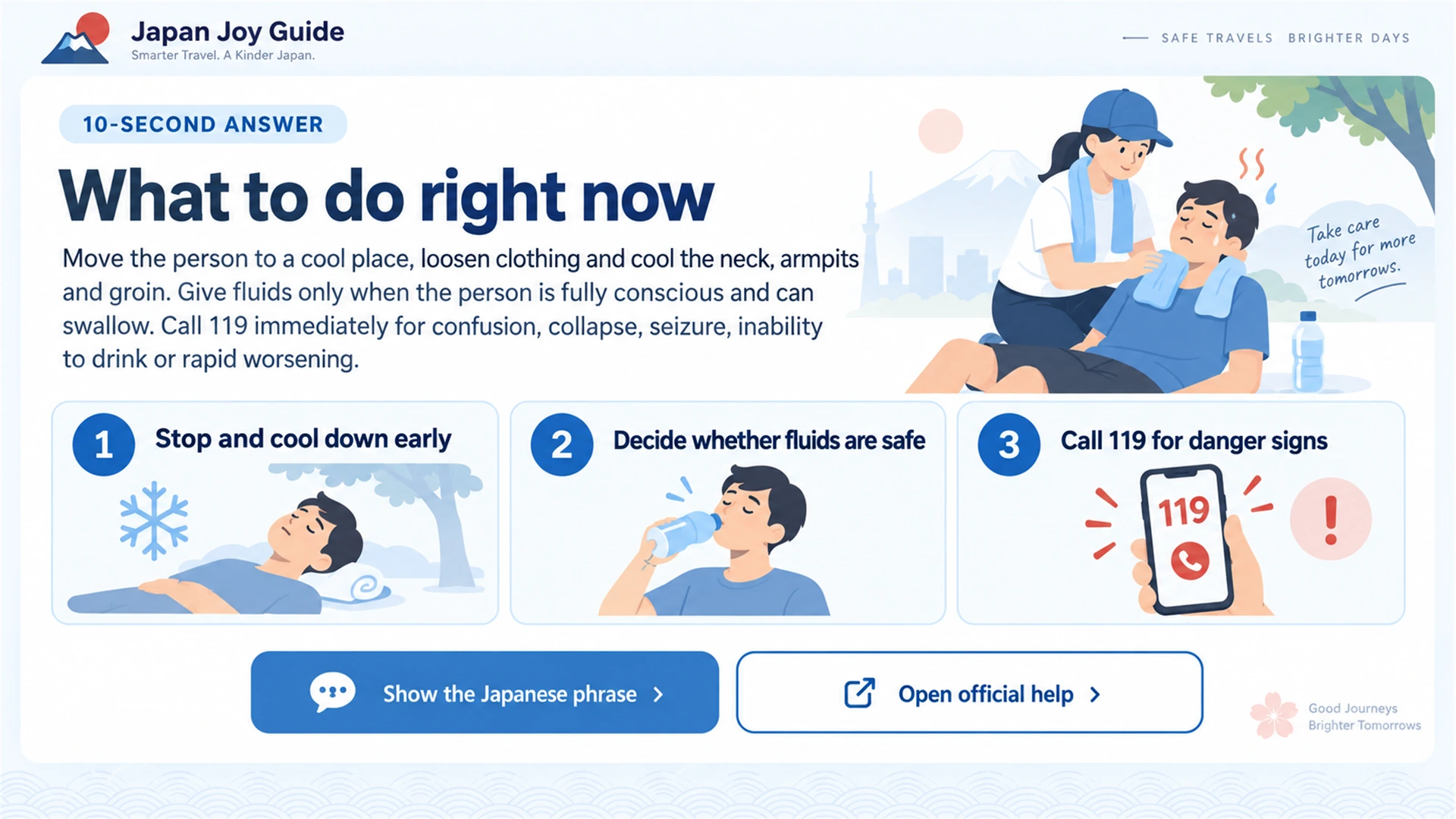
Ten-second heatstroke response in Japan: cool the person, give fluids only when safe, and call 119 for danger signsShow the Japanese phraseOpen official help
10-second answer: What to do right now. Move the person to a cool place, loosen clothing and cool the neck, armpits and groin. Give fluids only when the person is fully conscious and can swallow. Call 119 immediately for confusion, collapse, seizure, inability to drink or rapid worsening. 1. Stop and cool down early. 2. Decide whether fluids are safe. 3. Call 119 for danger signs.
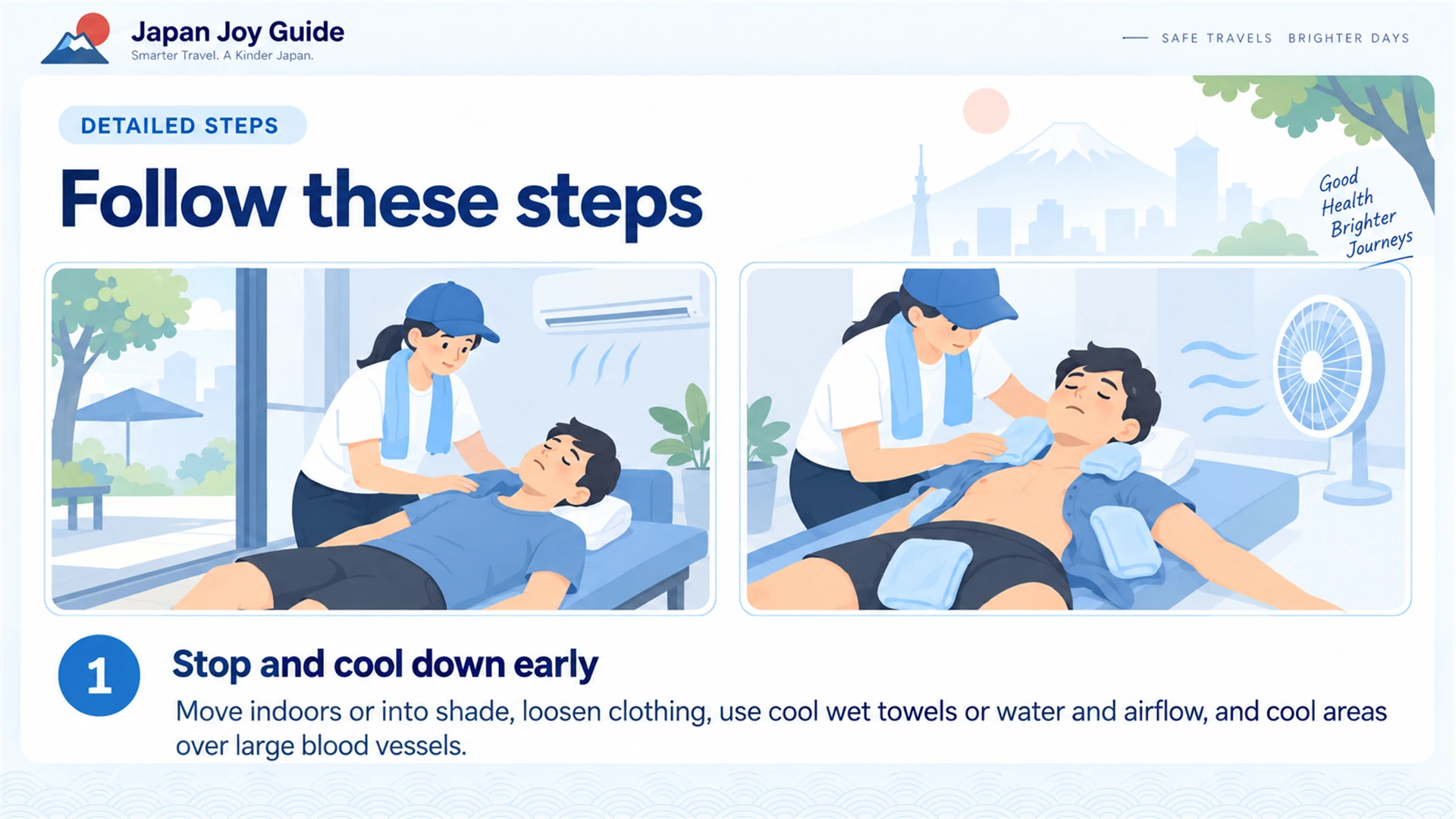
Step 1 for heat illness in Japan: move to a cool place, loosen clothing, use cool wet towels or water and airflow, and cool areas over large blood vessels
Detailed steps. Follow these steps. Step 1: Stop and cool down early. Move indoors or into shade, loosen clothing, use cool wet towels or water and airflow, and cool areas over large blood vessels.
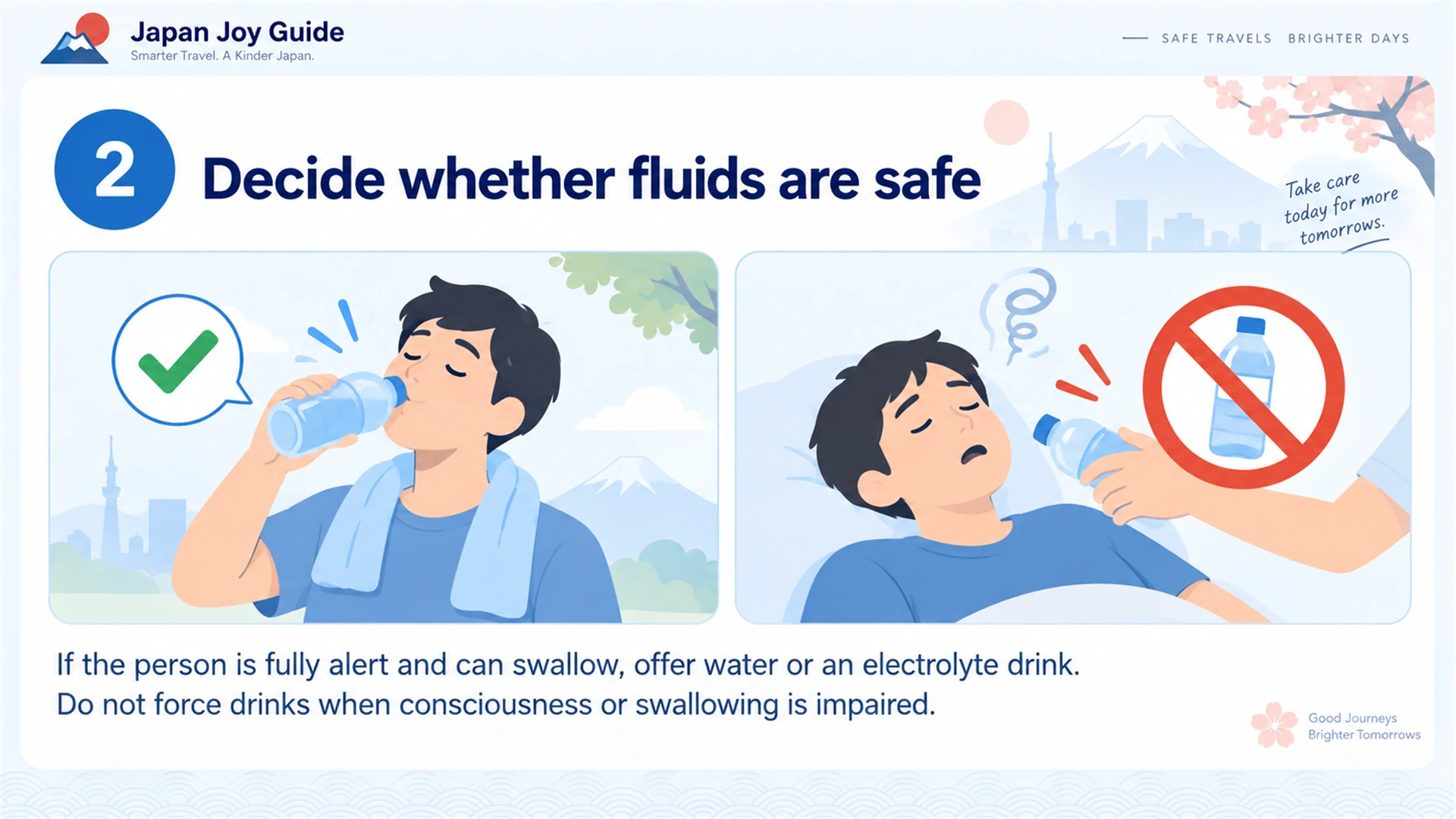
Decide whether it is safe to give water or an electrolyte drink
Step 2: Decide whether fluids are safe. If the person is fully alert and can swallow, offer water or an electrolyte drink. Do not force drinks when consciousness or swallowing is impaired.
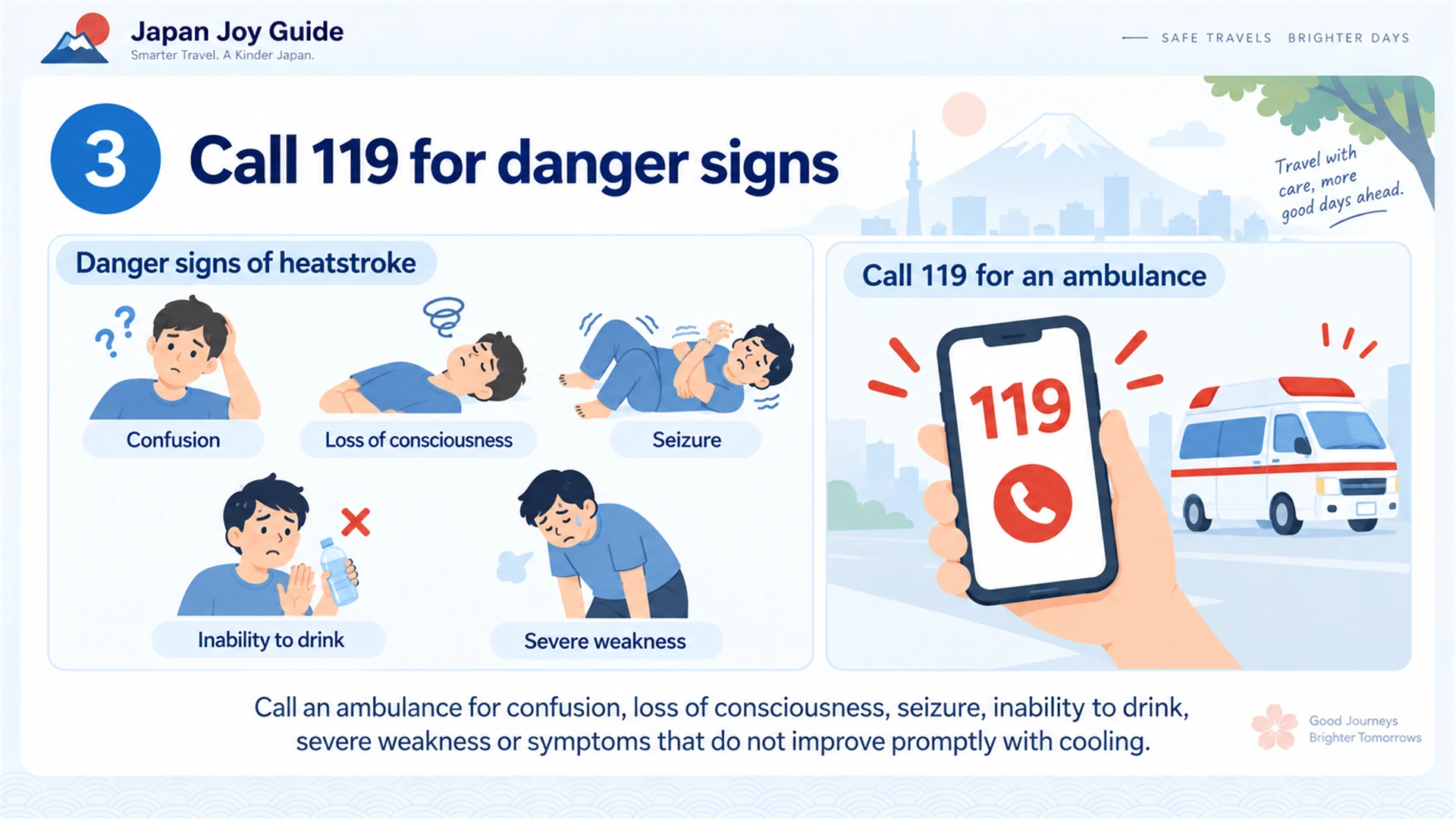
Danger signs of heatstroke and when to call 119 in Japan
Step 3: Call 119 for danger signs. Call an ambulance for confusion, loss of consciousness, seizure, inability to drink, severe weakness or symptoms that do not improve promptly with cooling.
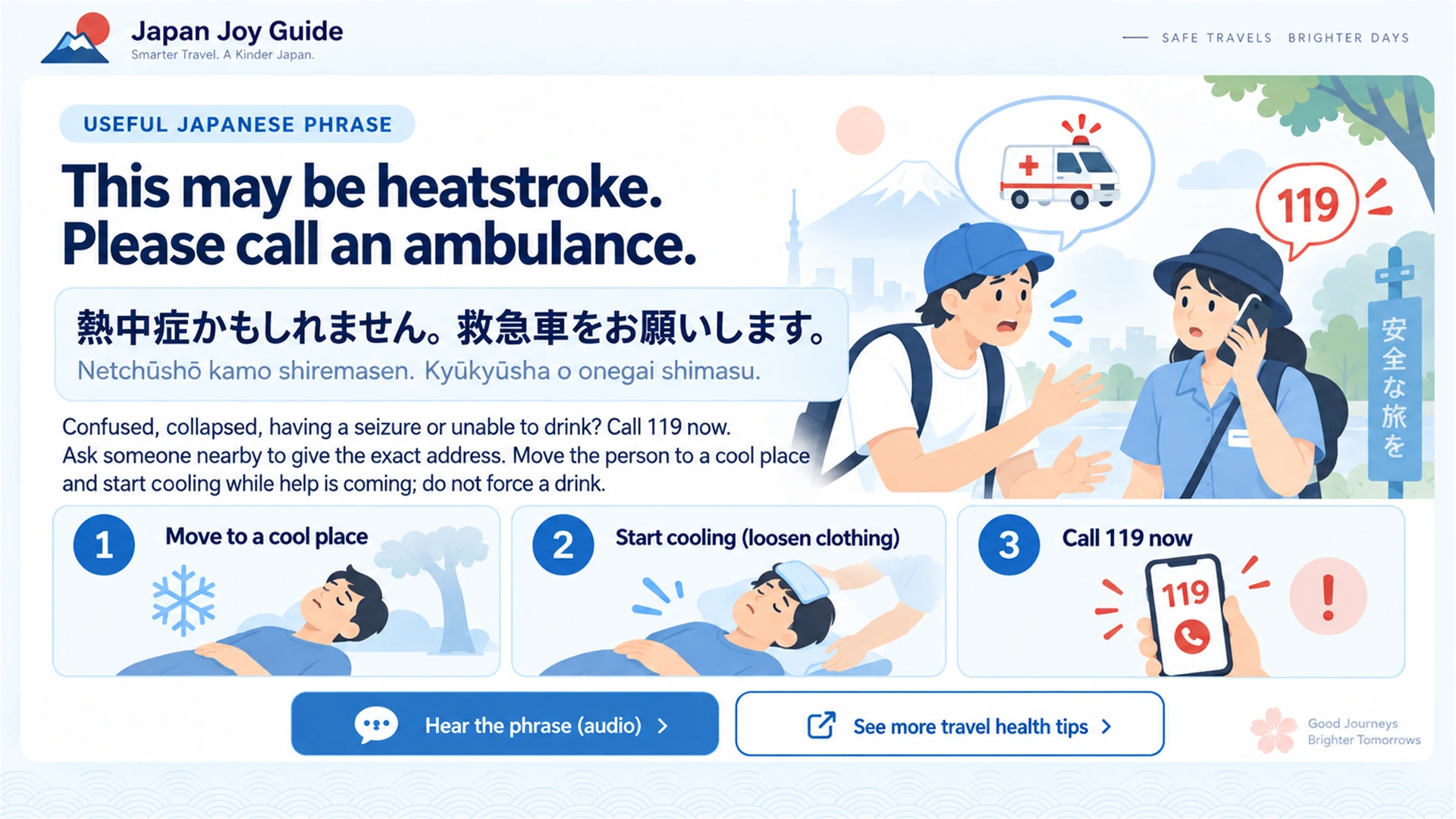
Japanese phrase card for calling an ambulance for heatstroke
This may be heatstroke. Please call an ambulance. 熱中症かもしれません。救急車をお願いします。 Netchūshō kamo shiremasen. Kyūkyūsha o onegai shimasu.

Confused, collapsed, having a seizure or unable to drink? Call 119 now. Ask someone nearby to give the exact address. Move the person to a cool place and start cooling while help is coming; do not force a drink.

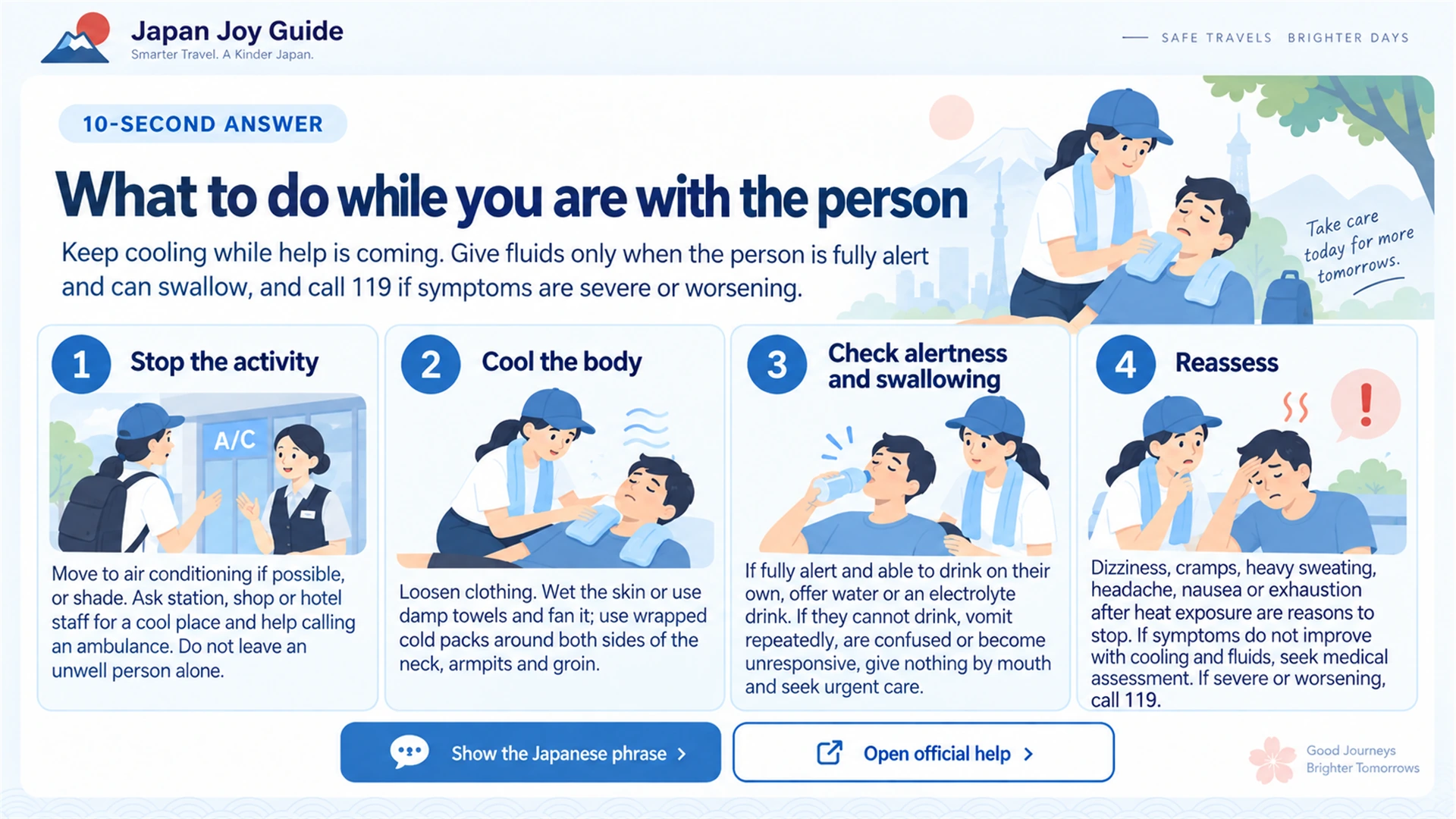
What to do while you are with the person

What to do while helping a person with heat illness in JapanShow the Japanese phraseOpen official help
Keep cooling while help is coming. Give fluids only when the person is fully alert and can swallow, and call 119 if symptoms are severe or worsening.
  1. Stop the activity. Move to air conditioning if possible, or shade. Ask station, shop or hotel staff for a cool place and help calling an ambulance. Do not leave an unwell person alone to keep sightseeing.
  2. Cool the body. Loosen clothing. Wet the skin or use damp towels and fan it; use wrapped cold packs around both sides of the neck, armpits and groin. Keep cooling while arranging care.
  3. Check alertness and swallowing. If fully alert and able to drink on their own, offer water or an electrolyte drink in manageable amounts. If they cannot drink, vomit repeatedly, are confused or become unresponsive, give nothing by mouth and seek urgent care.
  4. Reassess, not just rest briefly. Dizziness, cramps, heavy sweating, headache, nausea or exhaustion after heat exposure are reasons to stop. If symptoms do not improve with cooling and fluids, seek medical assessment. If severe or worsening, call 119; the doctor guide explains non-emergency searches.

Use Japan’s seasonal heat information before the outing

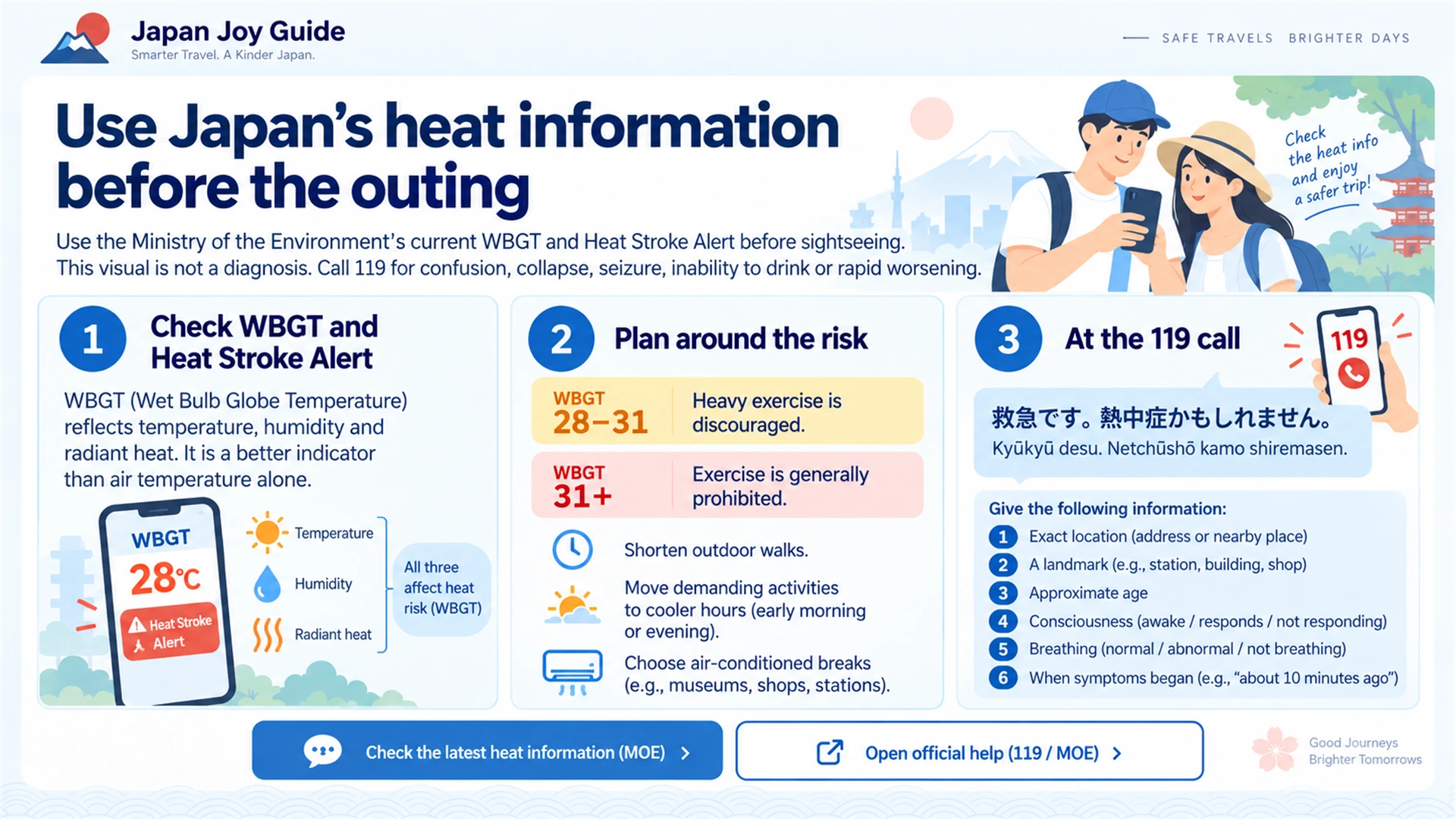
WBGT heat information and what to say in a 119 call in JapanCheck the latest heat information from the Ministry of the EnvironmentOpen official heat and ambulance help
During the operating season, use the Ministry of the Environment’s dated local WBGT and Heat Stroke Alert before sightseeing. Outside that season, check the service notice above; archived values are not current readings. Call 119 for confusion, collapse, seizure, inability to drink or rapid worsening.

Check the Ministry of the Environment’s local WBGT and Heat Stroke Alert rather than relying on air temperature alone. WBGT reflects temperature, humidity and radiant heat. At WBGT 28–31, heavy exercise is discouraged; at 31 or above, exercise is generally prohibited under the official activity guidance. For sightseeing, shorten outdoor walks, move demanding activities to cooler hours and choose air-conditioned breaks. These values are not a medical diagnosis or a guarantee of safety below a threshold.

Japan’s humid summer can be hard on a visitor newly arrived from a cooler climate. Carry drinking water, pause before feeling exhausted and check children, older companions and people who may have higher risk. Some medicines or illness can affect heat tolerance; ask a clinician about your own circumstances. Do not try to finish a mountain trail or a long queue just because the schedule says so.

At the 119 call

Say 救急です。熱中症かもしれません。 (Kyūkyū desu. Netchūshō kamo shiremasen.) — “It is a medical emergency. It may be heatstroke.” Give the exact location, a landmark, the person’s approximate age, consciousness, breathing and when symptoms began. Ask nearby staff to speak to the dispatcher if the address is difficult to explain. Do not delay the call to gather a passport or insurance documents.

Practical questions

Should I give salt tablets or medicine?

Cooling and appropriate fluids for an alert person come first. Do not force tablets or drinks on someone who is confused or cannot swallow. Medicine does not replace assessment for severe or persistent symptoms.

Can heat illness happen indoors or in September?

Yes. Humidity, poor ventilation, a hot room or prolonged travel can matter. Check dated local WBGT when the seasonal service is operating, local conditions and how the person feels. Do not rely on archived readings, the calendar or air temperature alone.

Is a pharmacy enough if symptoms persist?

No. If cooling and rest are not clearly helping, seek medical care. Call 119 for danger signs. For a stable, non-emergency illness, confirm an open facility via the medical guide.

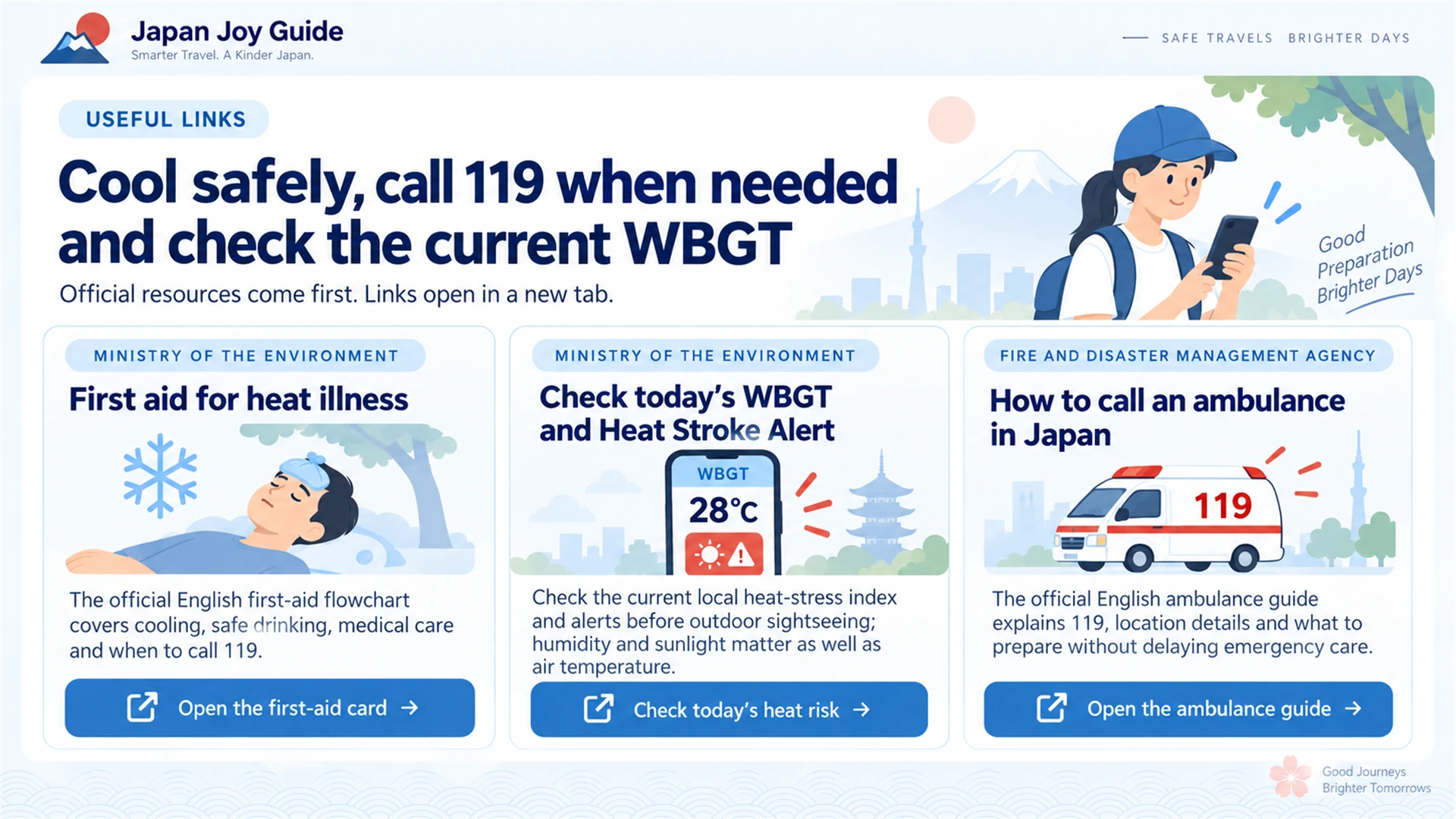
Ministry of the Environment’s English first-aid and WBGT guidance and Fire and Disaster Management Agency ambulance guidance checked September 19, 2026. This is travel first-aid information, not a diagnosis.